Ptolemy
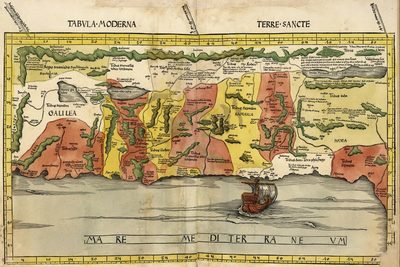
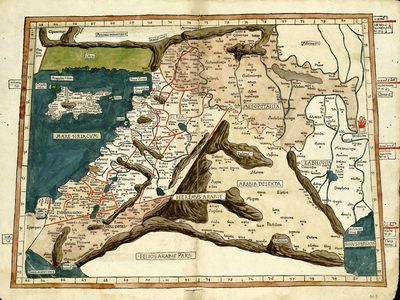
Ptolemy (c. 100–170 CE) was an Egyptian astronomer, mathematician, and geographer of Greek descent who flourished in Alexandria during the 2nd century and became one of antiquity's most influential scientific minds. Though little is documented about his life beyond his writings, his intellectual legacy profoundly shaped Western knowledge. His astronomical treatise, now known as the Almagest, presented the geocentric model of the universe that dominated astronomical thought for 1,400 years. His Geōgraphikē hyphēgēsis (Guide to Geography) provided comprehensive techniques for mapmaking and recorded longitudes and latitudes in degrees for approximately 8,000 geographical locations, enabling precise cartographic reproduction. Ptolemy's innovative methods of map projection and geographical systematization remained the standard until the Renaissance. His geographical work remained virtually unknown in Europe until approximately 1300, when Byzantine scholars produced illustrated manuscript copies with reconstructions of his maps, ultimately reshaping European understanding of world geography.
2 works