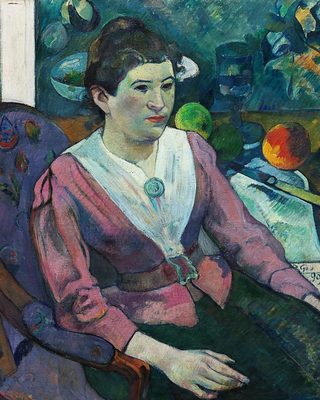
Paul Gauguin
French, 1848–1903
Paul Gauguin (1848-1903) was a French painter who rejected materialist society in favor of a spiritual and emotional artistic vision expressed through Post-Impressionist, Synthetist, and Symbolist approaches. Initially active in Paris and Brittany before seeking inspiration in exotic locales, Gauguin moved to Tahiti in 1891, establishing himself as a canonical figure of primitivism and colonial fantasy in Western art. Though disappointed by French colonization's extent, he immersed himself in Tahitian culture and portraiture, creating works with idyllic landscapes and Tahitian titles that romanticized indigenous life while establishing a new aesthetic vocabulary. Gauguin's creative partnership and artistic rivalry with Vincent van Gogh became legendary, while his self-imposed exile from Western society—divided between two periods in Tahiti (1891-1893, 1895-1901) and the Marquesas Islands (1901-1903)—reinforced his status as the artist-prophet rejecting civilization. His influence on early twentieth-century avant-garde movements proved profound.
1 work