George Bellows
American, 1882–1925
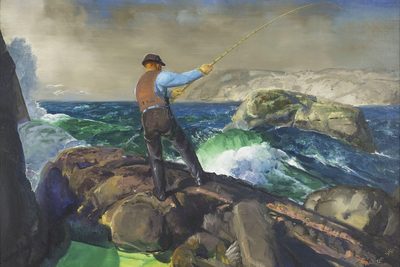
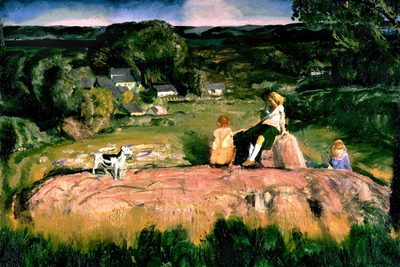
George Bellows (1882–1925) was an American realist painter and printmaker who became a central figure of the Ashcan School. Born in Columbus, Ohio, he moved to New York City to study under Robert Henri, whose teachings profoundly shaped his artistic vision. Bellows became renowned for capturing urban life with bold brushstrokes and raw energy, depicting scenes of working-class New Yorkers and contemporary subjects often overlooked by academic artists. His vigorous style enabled him to explore diverse themes, from boxing matches to landscapes and portraits. Works such as The Fisherman exemplify his engagement with narrative and human experience, while Three Children reflects his sensitivity to portraiture. Bellows achieved rapid success, earning recognition from the National Academy of Design in 1913 and becoming one of the most important American realists of his generation. He also pioneered significant work in lithography, expanding the medium's artistic potential. Bellows died in 1925 at just 42 years old, leaving a legacy that helped establish American modernism as distinct from European traditions.
2 works